

How To Install Pwm Fans
*Updated 3rd of October 2022.*
The option of decision-making the fan speed and the satisfaction of silent computing were non always present when it comes to personal computers. The early x86 computers did not accept active cooling because non much estrus was generated, right until the introduction of the start 486 models. From that time and up until now, the computer power consumption and thermal dissipation have grown exponentially, as well as their functioning.
From the very first Pentium processors that were declared at 7W TDP, and all the way down to the modern day AMD FX 9590 processor that is rated at 220W, the cooling besides had its ain evolutionary path. TDP stands for "Thermal Design Power" and information technology is the maximum amount of oestrus generated by the processor. If you are to stumble upon an abbreviation that you don't understand, accept a peek at our "Liquid cooling glossary" page and you just might detect the correct answer!
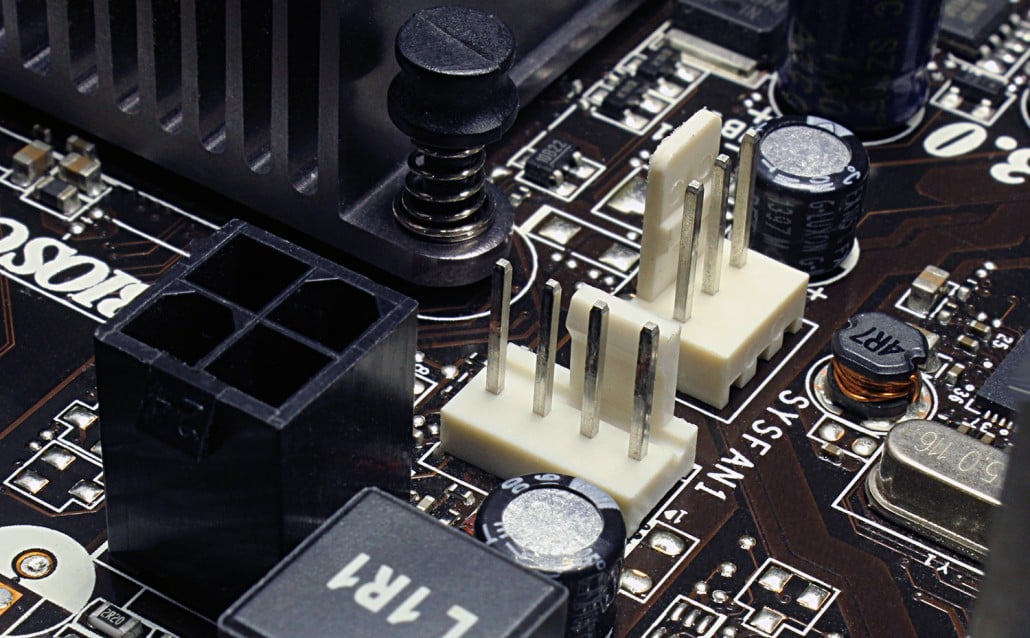
iv-pin PWM header tin automatically control the speed of your fans and pumps.
Early bootleg fan controllers used a unproblematic "volt mod" by choosing five, 7 or 12V from a archetype molex connector. Information technology was followed by the use of ordinary resistors to slow the fans downwards, fans equipped with thermal resistors, diverse potentiometers for a broad range manual speed control, etc.
But present, if y'all want to command the speed of your fans and pumps, PWM control is the way to go. Every mainstream motherboard that leaves the factory today is equipped with at least one iv-pivot PWM header. High-cease motherboards offer four-six or even more of these iv-pin fan/pump connectors, and the PWM arrangement is a very effective and smart way to command the fans. However, even today, many years after the introduction of PWM in 2003, there are users that are however not familiar with its advantages. And worse, there are serious companies out in that location that make advanced and well-designed fans with onetime-fashioned three-pin connectors.
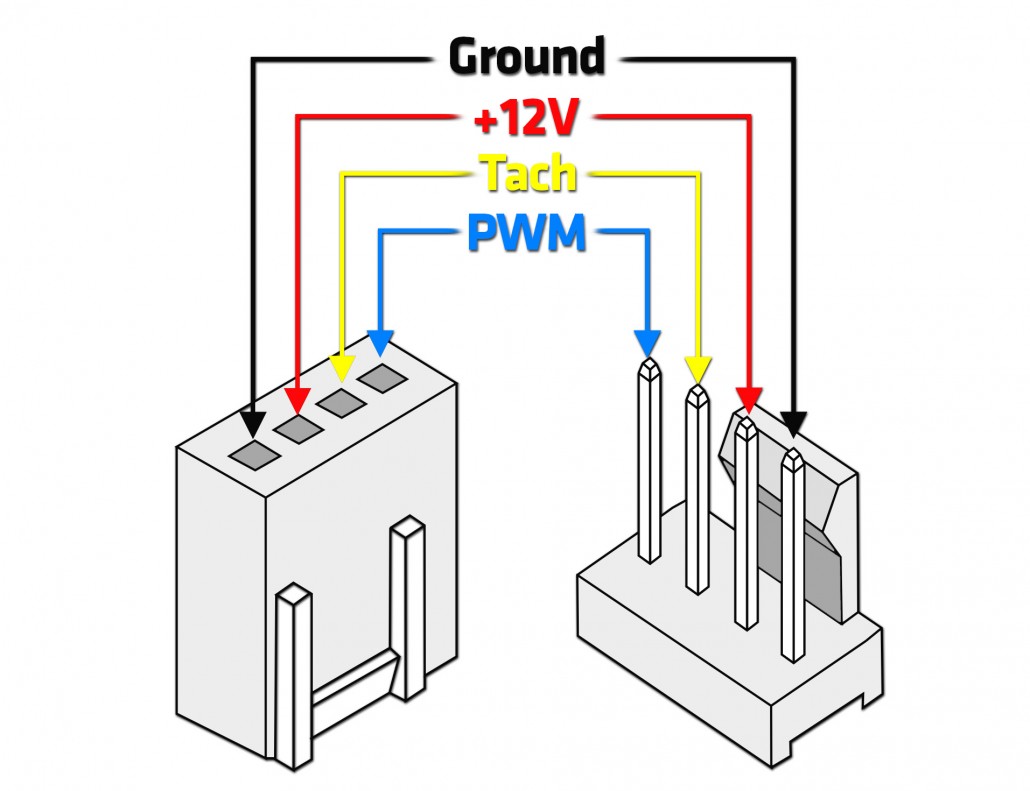
Therefore, nosotros will explain what PWM actually is, how it controls the speed of fans and pumps, and we will besides testify you an example of a PWM contour in one of the software provided by the motherboard manufacturers.
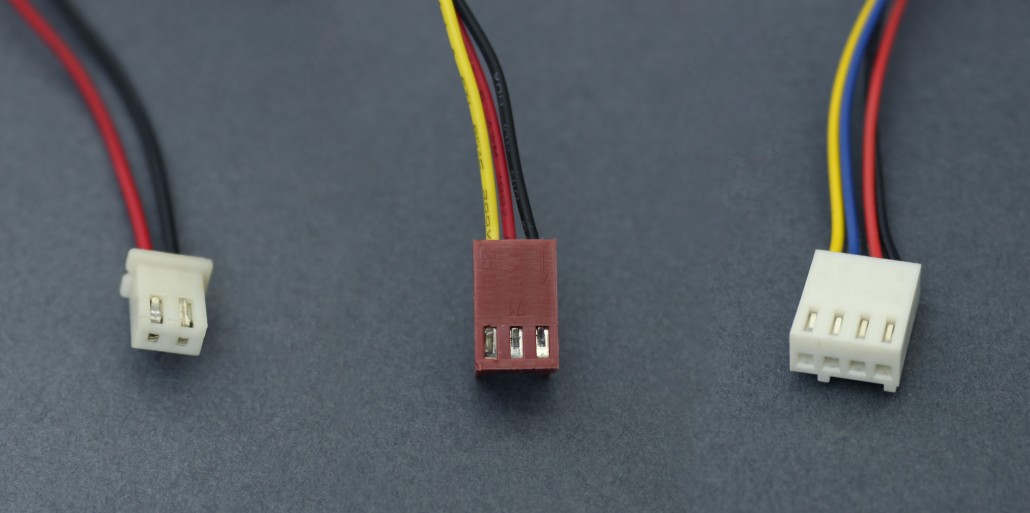
Past the number of wires – pins that a fan has – we tin distinguish three main types of connections. Fans with only two wires accept only plus and minus (ground) connections and that'south it. The second type has 3 wires; two for powering the fan and one that carries the so-chosen "Tach" or tachometric betoken (in English: the wire that gives a readout of the current fan speed). A indicate is sent via this 3rd wire with a sure frequency that is proportional to the fan speed, expressed in RPM (revolutions per infinitesimal). The third blazon of fans that utilize four wires are PWM fans and that is what volition be discussed in this article, along with PWM pumps.
PWM (Pulse Width Modulation) or modulation with the width of an impulse, is a widespread term in the world of electrical technology. It has a broad range of application, like in the field of telecommunications, audio equipment, servo motors, etc. Interesting for united states of america enthusiasts is the application of PWM in voltage regulation. If you've followed our recent blog article on MOSFETs and VRMs, yous know what we are talking well-nigh. Some of yous probably already know the principle on which pulse width modulation (PWM) works, but however, we will explicate how it actually controls the speed of a fan or a pump.
In short, PWM operates like a switch which constantly cycles on and off, thereby regulating the corporeality of power the fan or pump motor gains. The PWM system that is used for controlling fans and pumps works with the motor, either getting +12V (total power) or 0V (no power). To take a better understanding how this works, take a wait at the chart bellow.
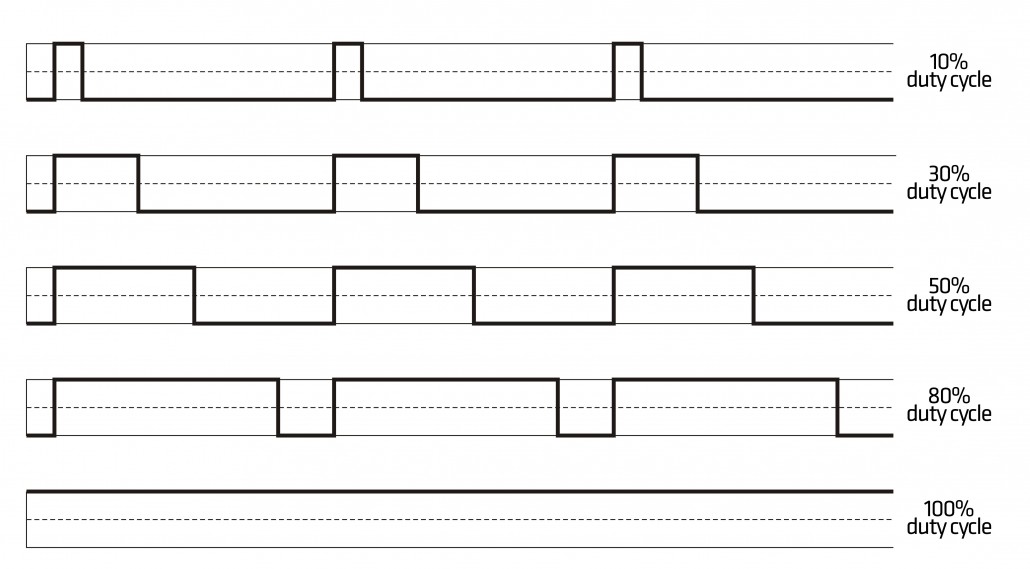
So, the motor is being fed impulses of power. Imagine it the same manner every bit if yous were to turn the bicycle with your hand. You lot can push the wheel every five seconds with the same amount of force, and you will keep the wheel spinning. Yous can also speed up the interval when y'all are pushing the wheel; let's say yous nudge it every 3 seconds. In that example, you would notice that the wheel is spinning a bit faster, and in well-nigh the same way is how the Pulse Width Modulation works. The speed of the motor, i.e. the fan or pump, is determined past the width of the PWM point – the length of the time information technology is powered on.
As seen on the chart above, a 10% duty bicycle gives just a few impulses of power over a period of time, meaning that the motor will spin slowly, and a 100% duty cycle means that the fan/pump will work at full speed, constantly being powered on.
It is important to know that in that location is no voltage regulation involved here, and by using PWM regulation the motor is constantly being fed 12 volts. For that reason, the 4-pin motherboard header should be used only for one fan, or eventually two, by using the Y-splitter. Pumps for water cooling have significantly bigger power consumption, then the power is mostly hooked upwards to the molex connector, and the other two tach and PWM wires are connected to the motherboard header for PWM control and speed readout.
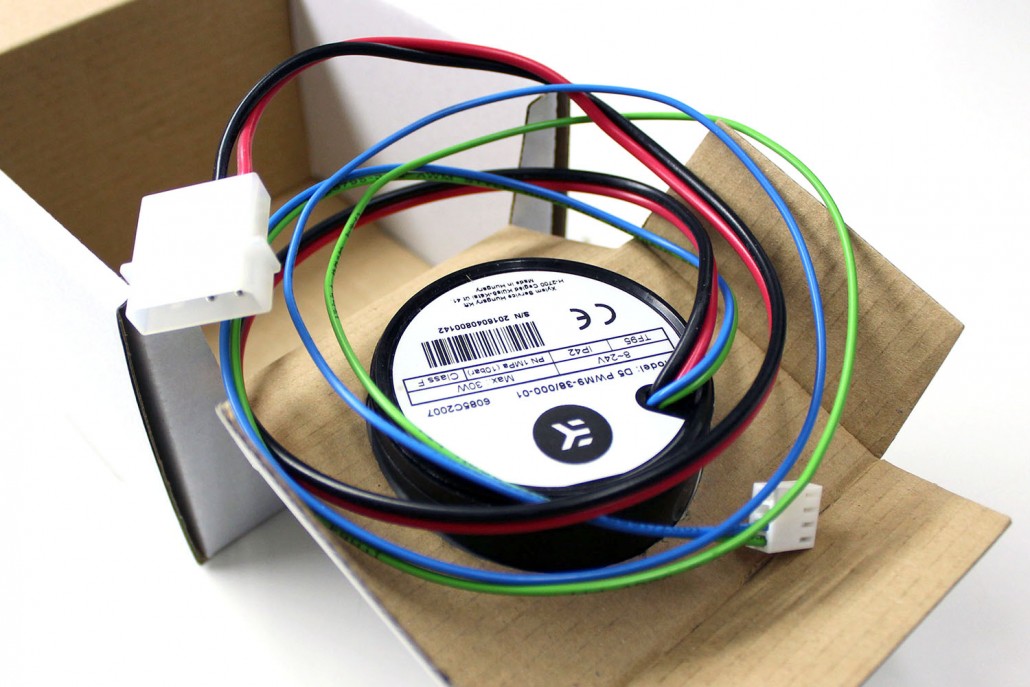
If no PWM signal is present, almost all fans volition work on 100% of ability, while most pumps used in h2o cooling will operate at some medium speed. Meaning, if you want to run the pump on full power, yous need to claw it up to a PWM bespeak that is assail 100% duty bike.
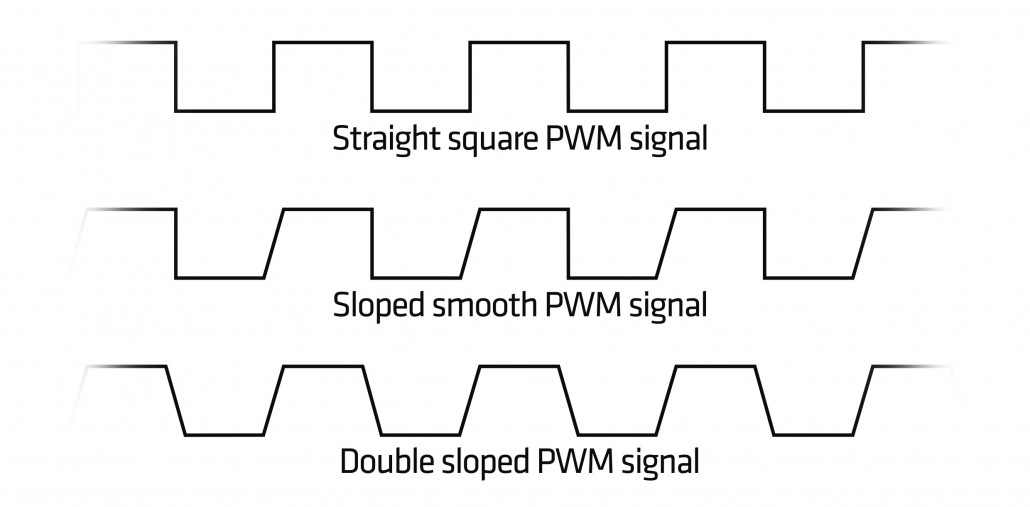
More quality fans have their own special IC commuter chips within the motor hub that generate a sloped PWM signal instead of a apartment square one. Flat square signals tend to create unpleasant clicking noises when the fan runs at low speeds. The sudden ascent of power when the motor is given +12 volts results in the rotor beingness jerked, which in some cases creates the clicking audio. The use of special ICs makes sure that the motor is powered on more than gently each time an impulse is given. This is non something you really need to know, but information technology'due south here for you to understand why quality PWM fans cost a bit more than.
Why is PWM and then important? Well, nearly all fans „die" if the voltage is lowered under 5V, simply with PWM command, the fans can reach actually low performance speeds of 300-600 RPM. They don't die literally; they just shut down and finish spinning, and that is why often the alleged speed range of the fan tin simply exist achieved by using PWM regulation. At these speeds, the fans are dead silent, and some fans tin can even be turned off completely via PWM regulation. One more than very cool thing nigh PWM regulation is that you lot can apply one PWM signal to govern all of your fans. Since the fans are getting 12 volts all the time, you lot can utilise special fan hub splitters that will transport one PWM signal to all of the connected fans or fifty-fifty pumps. This way, all of your fans and pumps will work in harmony.
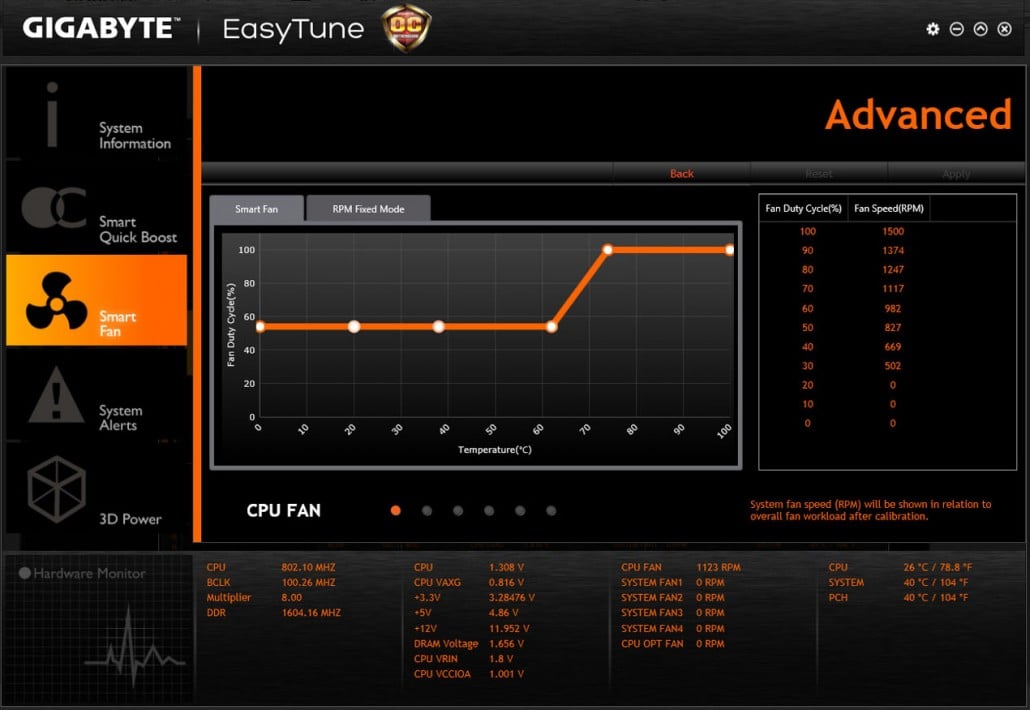
Let's take a wait at some software that motherboard manufacturers provide for PWM regulation. Almost every motherboard manufacturer has got the PWM regulation story very serious, and that's why we accept very detailed settings available, which is actually good. All your „noise producing" components can be kept at low speeds and you can set the PWM duty cycle curve according to the temperature readouts. In the Gigabyte EasyTune instance given above, the PWM profile is set up to run the fans on most 55% of speed when the CPU temperature is lx°C or lower. When the temperature reaches 70°C, the fans will speed upwards to 100% duty cycle. Unproblematic and very efficient fashion to get a silent computer, of course, if you are equipped with quality PWM fans and quality PWM pumps.
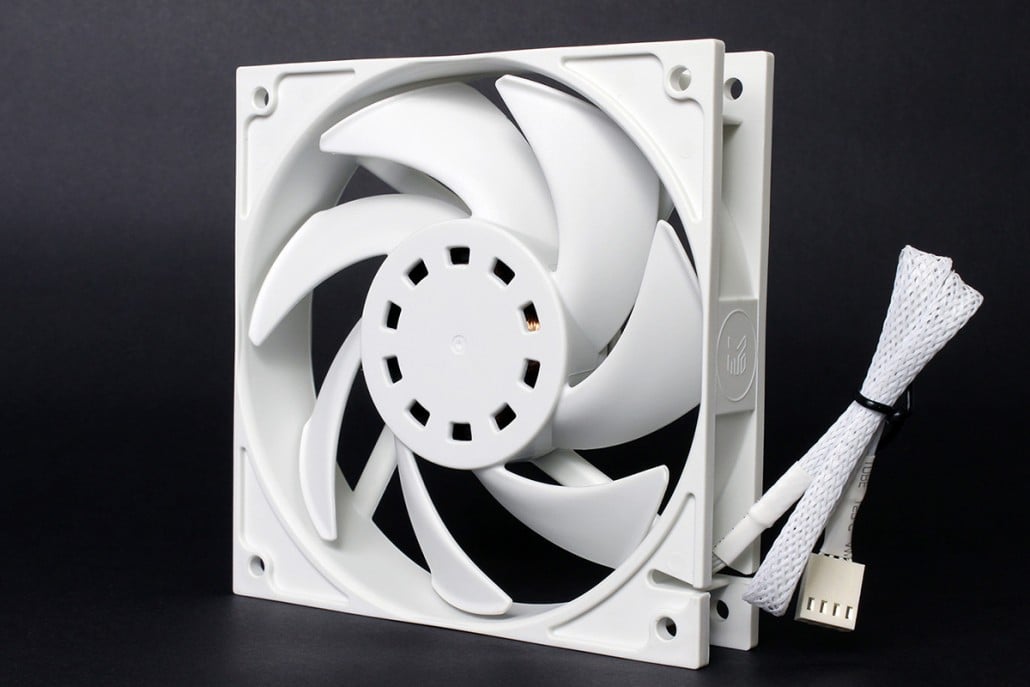
All EK products, for example, fans and pumps, have PWM feature and you just have to wait for the following icon in our Shop! 🙂


Source: https://www.ekwb.com/blog/what-is-pwm-and-how-does-it-work/
Posted by: quandttoofte01.blogspot.com
0 Response to "How To Install Pwm Fans"
Post a Comment